The pond plate drawer
Four illustrated details to take to the water's edge. Open a plate for a short looking exercise.
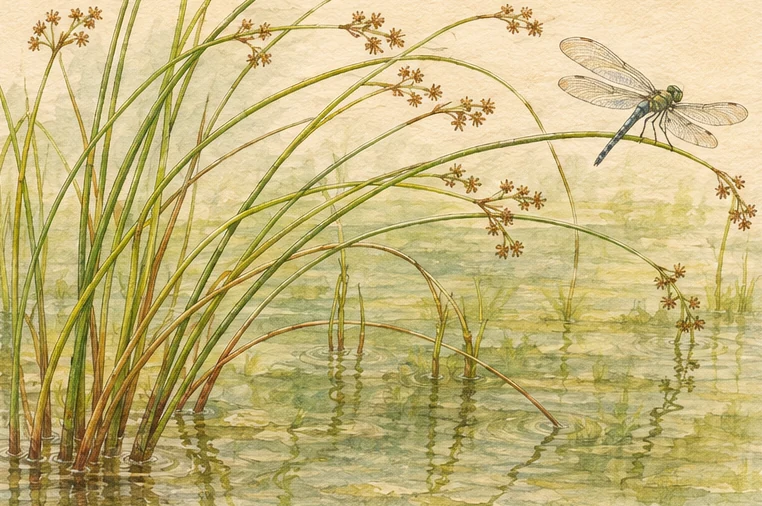 Rushes
Choose one upright stem and one leaning stem. Mark their angles before drawing their leaves.
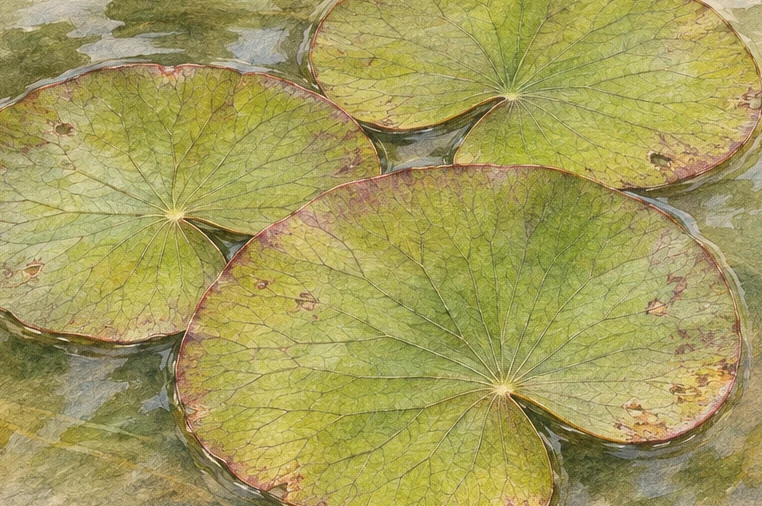 Lily pads
Follow the edge of a single pad until another crosses it. Look for the fine shadow at the overlap.
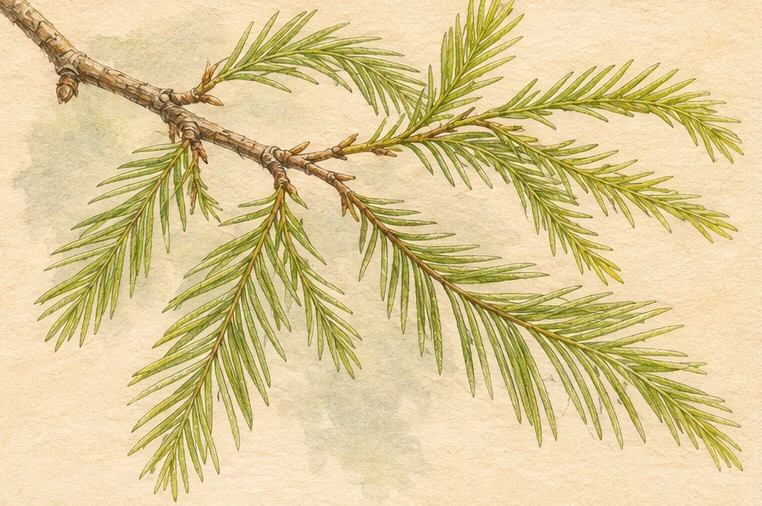 Cypress twig
Trace the main axis first. Let the smaller leaves follow the angles you can see.
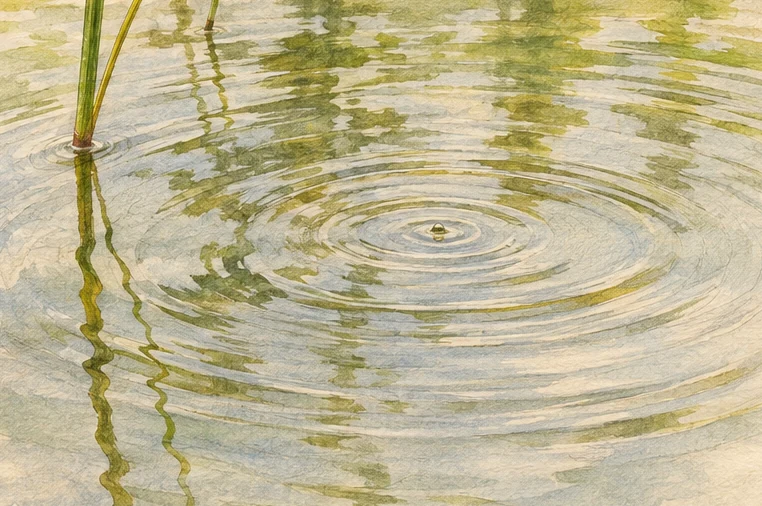 Ripple rings
Find a reflection that crosses several rings. Look for the breaks where the surface changes direction.
How to use the drawer
Pick one plate before you leave. At a familiar pond, look from a public path for a similar shape or surface. Give yourself time to notice an exception. A reed that leans away from its neighbours or a pad that sits below the surface can be easier to describe than the whole bank.
Bring back a comparison
Write one sentence about the drawing and one about what you actually saw. Keep both when they differ. An illustration leaves out the clutter at an uneven shoreline, and that clutter may be the most interesting part of your own observation.